Patellar Tendinopathy (Jumper's Knee)
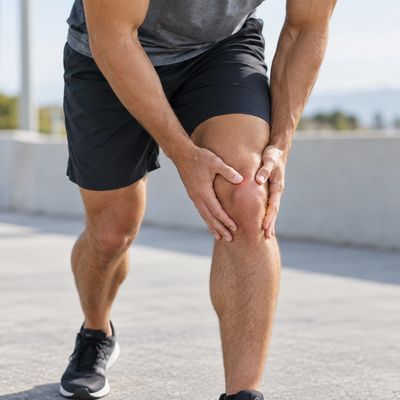
Pain below your kneecap that flares with sport and won’t settle with rest?
Rest alone rarely fixes patellar tendinopathy. Recovery requires a structured loading programme, and for persistent cases, focused shockwave therapy can make a significant difference. We use ultrasound to confirm the diagnosis and guide treatment from the outset.
What is Patellar tendinopathy?
Patellar Tendinopathy is a common cause of pain at the front of the knee, specifically at the lower pole of the kneecap (patella), where the patellar tendon originates. The patellar tendon connects the kneecap to the shin bone and plays a crucial role in activities that involve jumping, running, and rapid changes of direction.
Despite sometimes being called 'jumper's knee', the condition is not simply a matter of inflammation caused by jumping activities. In many cases - particularly where symptoms have persisted for weeks or months - the underlying problem reflects a failure of the tendon to adapt and recover from repetitive loading. This is known as a reactive or degenerative tendinopathy, and it responds better to load-based rehabilitation than to rest alone.
Common Symptoms
Symptoms can vary in intensity and may be present during activity, after activity, or both.
Typical features include:
• Pain at the lower pole of the kneecap, often well-localised
• Discomfort that worsens with jumping, squatting, or running
• Stiffness at the front of the knee after prolonged sitting or rest
• Tenderness on pressing into the patellar tendon
• Pain that initially eases once 'warmed up' but returns after activity
In more severe cases, pain may be present throughout activity and interfere significantly with daily tasks
Who does it commonly affect?
Patellar tendinopathy is most common in people who regularly participate in sports or activities that involve high loads through the knee. It can also develop gradually in individuals who have recently increased their training volume or returned to activity after a period of rest.
It is particularly common in:
• Volleyball and basketball players
• Sprinters, footballers, and rugby players
• Individuals who have recently increased training volume or intensity
• Those with reduced hip strength, altered movement patterns, or tight quadriceps
• People who have returned to sport after a period of rest
How is patellar tendinopathy usually treated
Patellar tendinopathy responds well to structured rehabilitation, but recovery often requires patience and a gradual increase in loading rather than complete rest.
Common elements of management include:
• Load management - reducing high-impact activity in the short term while maintaining strength work
• Isometric and progressive resistance exercises targeting the quadriceps and patellar tendon
• Hip and gluteal strengthening to address biomechanical contributors
• Activity modification to avoid provocative tasks during the initial phase
• Manual therapy to address associated stiffness in the knee, hip, or ankle
For persistent or long-standing symptoms that have not responded to exercise-based care alone, focused shockwave therapy is a well-evidenced option. It stimulates the tendon's natural repair processes and is typically well tolerated.
Why our approach is different
At Tenby Health we carry out a thorough clinical assessment before deciding on treatment.
Our approach combines:
• Clinical assessment and diagnostic imaging where indicated
• Supervised rehabilitation sessions tailored to the individual
• Progressive exercise prescription targeting the tendon and contributing muscle groups
• Guidance on load management and return to sport
What to do next
If knee pain or patellar tendinopathy is affecting your daily life, the most important first step is a proper assessment.
Book a new patient consultation and we will assess your symptoms, confirm the diagnosis, and explain your options clearly - whether that’s shockwave, rehabilitation, diagnostic ultrasound, or a combination. Most people leave their first appointment knowing what’s going on for the first time.