Tennis Elbow treatment In Tenby, Pembrokeshire
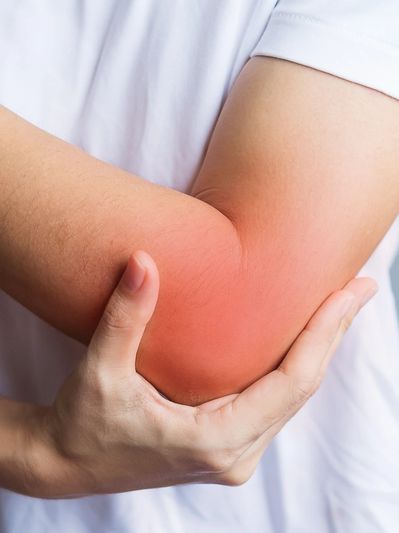
Pain on the outside of your elbow when you grip or lift?
Does carrying a shopping bag, using tools, shaking hands or picking up a kettle hurt?
Tennis elbow is one of the most common causes of outer elbow pain. It can make surprisingly simple everyday tasks painful, but most people recover well with appropriate advice and rehabilitation.
What is tennis elbow (lateral elbow tendinopathy)?
Tennis elbow, also known as lateral elbow tendinopathy, is a common cause of pain on the outside of the elbow. It usually affects the tendons that attach the forearm extensor muscles to the outer part of the elbow.
Despite the name, you don't need to play tennis to develop it. Symptoms commonly occur during gripping, lifting and repetitive hand or wrist activities, and it can affect people at work, during sport or in everyday life.
Rather than simply being an “inflamed tendon”, persistent tennis elbow is better understood as a load-related tendon problem. Rehabilitation therefore usually focuses on gradually rebuilding the ability of the tendon and forearm muscles to tolerate the activities that provoke symptoms.
Common Symptoms
Symptoms are usually well-localised to the outer elbow, though pain can radiate down the forearm. Common features include:
- Pain on the outer side of the elbow, often well-localised
- Discomfort when gripping, lifting, or carrying
- Pain when shaking hands or turning a door handle
- Weakness in the forearm or wrist
- Tenderness when pressing into the lateral epicondyle
- Pain that worsens with repeated use and eases with rest
Who does it commonly affect?
Tennis elbow is one of the most common upper limb complaints presenting in clinical practice. It most frequently affects people in their 40s to 60s, but can occur at any age.
It is particularly associated with:
• Repetitive gripping, lifting, or twisting activities at work or in sport
• Manual workers, tradespeople, and those who use hand tools
• Computer users who adopt poor wrist or forearm postures
• Racket sports players, particularly those with poor technique or equipment fit
• Gardeners and those engaged in repetitive household tasks
It often develops gradually without a single identifiable injury.
How is tennis elbow usually treated?
Most cases improve with appropriate conservative care, but this often requires a combination of approaches rather than a single treatment.
Common elements include:
- Load management and activity modification to reduce strain on the tendon
- Targeted strengthening exercises for the forearm extensors and wrist
- Addressing grip strength, shoulder mechanics, and contributing factors
- Supportive bracing where appropriate
- Manual therapy to the elbow, wrist, and cervical spine where indicated
For persistent or long-standing symptoms that have not settled with time or basic care, focused shockwave therapy is commonly used as part of a structured care pathway.
Is all outer elbow pain tennis elbow?
No. Although tennis elbow is a common cause of pain on the outside of the elbow, other problems can produce similar symptoms.
Pain can sometimes arise from other structures around the elbow or forearm, or occasionally be referred from elsewhere. This is why we start with a clinical assessment rather than assuming that outer elbow pain is automatically tennis elbow.
If your presentation is typical, imaging may not be necessary. If something doesn't fit, we can discuss whether further investigation would be useful.
Why our approach is different
At Tenby Health, we focus on understanding the problem properly before deciding on treatment. Where clinically appropriate, we use diagnostic ultrasound to assess the extensor tendons, confirm the diagnosis, and rule out other causes of elbow pain.
This allows treatment to be targeted and appropriate, rather than applied on a trial-and error basis. For suitable cases, focused shockwave therapy is used alongside a structured rehabilitation programme.
Our approach combines:
- A structured clinical assessment
- Diagnostic imaging, where indicated
- Supervised rehabilitation sessions
- A progressive exercise plan targeting the tendon and contributing muscle groups
- Guidance on activity modification and return to sport or work
What to do next
If outer elbow pain or tennis elbow is affecting your daily life, the most important first step is a proper assessment.
Book a new patient consultation and we will assess your symptoms, confirm the diagnosis, and explain your options clearly - whether that’s shockwave, rehabilitation, diagnostic ultrasound, or a combination. Our aim is for you to leave your first appointment with a much clearer understanding of what is causing your symptoms and what to do next.