Elbow Pain Treatment, Tenby, Pembrokeshire
Elbow Pain Assessment and Treatment
Elbow pain is a common complaint that can affect people of all ages and activity levels. Whether it develops gradually from repetitive use or suddenly after an injury, elbow pain can make everyday tasks, from lifting a kettle to working at a desk surprisingly difficult.
Whether your symptoms are caused by sport, work or everyday activities, our diagnosis-led approach aims to identify the underlying cause and guide the most appropriate treatment.
Diagnosis-led Care
Every appointment begins with understanding why you're in pain. Depending on your symptoms, this may involve a detailed clinical assessment, diagnostic ultrasound where appropriate, and a clear explanation of your diagnosis and treatment options.
We Can Help With:
- Pain on the outer or inner elbow
- Pain gripping or lifting objects
- Elbow pain during or after sport
- Forearm pain or weakness
- Elbow stiffness or reduced movement
- Elbow pain from repetitive work or computer use
- Pain after a fall or impact to the elbow
Common Causes of Elbow Pain
Tennis elbow (lateral epicondylitis)
Irritation of the tendons on the outer elbow, typically from repetitive gripping or wrist extension. One of the most common causes of elbow pain, and despite the name, most sufferers have never played tennis.
Golfer's elbow (medial epicondylitis)
Irritation of the tendons on the inner elbow, often from repetitive flexion or gripping. Common in manual workers and those who do repetitive arm movements.
Elbow bursitis
Inflammation of the bursa at the back of the elbow causing swelling and tenderness.
Elbow joint arthritis
Age-related or post-injury joint changes causing stiffness and pain.
Referred pain from the neck
Cervical spine problems can refer pain into the elbow and forearm. A thorough assessment distinguishes between local elbow and referred neck sources.
Nerve irritation
Including cubital tunnel syndrome - irritation of the ulnar nerve at the elbow causing tingling or numbness in the ring and little fingers.
How We Diagnose Elbow Pain
Your assessment includes a detailed case history and physical examination. Diagnostic musculoskeletal ultrasound can be used to assess:
- Tendons - including the common extensor tendon (tennis elbow), common flexor tendon (golfer's elbow), distal biceps tendon and distal triceps tendon
- Bursa
- Soft tissue swelling
- Ligaments
Not everyone with elbow pain needs an ultrasound. If imaging is likely to provide useful diagnostic information, we can usually perform it during your appointment.
Treatment Options
Treatment depends on your diagnosis and may include:
- Rehabilitation exercise targeting elbow and forearm strength
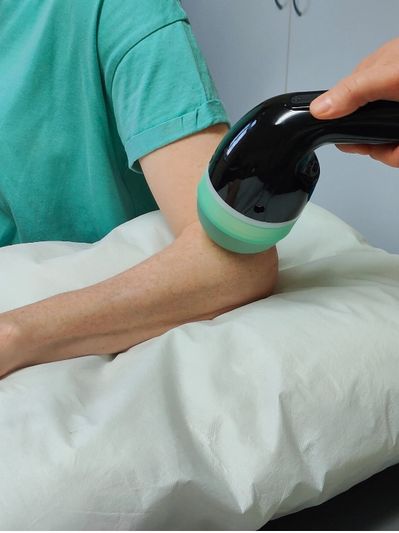
- Focused shockwave therapy - particularly for tennis elbow and golfer's elbow
- Manual therapy
- Load management and activity modification advice
- Ergonomic advice for work-related elbow pain
- Referral for imaging or specialist opinion where needed
Our Goals
- Reduce pain
- Improve grip strength
- Restore elbow movement
- Help you return to work, sport and hobbies
- Reduce the risk of recurrence
Why Choose Tenby Health?
- Diagnosis-led care - we focus on understanding the cause of your pain before recommending treatment. Where appropriate, diagnostic musculoskeletal ultrasound can be used to provide additional detail.
- West Wales' specialty clinic combining diagnostic ultrasound, focused and radial shockwave therapy, chiropractic care and rehabilitation under one roof.
- Evidence-based treatment - guided by current research, relevant professional guidance and your individual clinical findings.
- Tailored plans - your treatment is specific to your diagnosis, your goals and your lifestyle.
- Qualified MSK sonographer - Ben holds a Postgraduate Certificate in Musculoskeletal Medical Ultrasound with distinction.
- No long waits - appointments usually available within days. No referral needed.
- Serving West Wales - supporting patients across Pembrokeshire, Carmarthenshire and Ceredigion.
What to do next
If elbow pain is affecting your daily life, the most important first step is an accurate assessment.
Book a new patient consultation and your clinician will assess you thoroughly, explain clearly what is causing your symptoms and discuss all your options.
No referral is needed. Appointments are usually available within days.
If a diagnostic ultrasound scan is appropriate, it can usually be carried out in the same appointment for an additional fee of £100.
Most people leave their first appointment with a clear diagnosis and a plan for the first time.